Case Presentation:Group 3Group 3:This is the Beginning…Nephrolithiasis
Urolithiasis
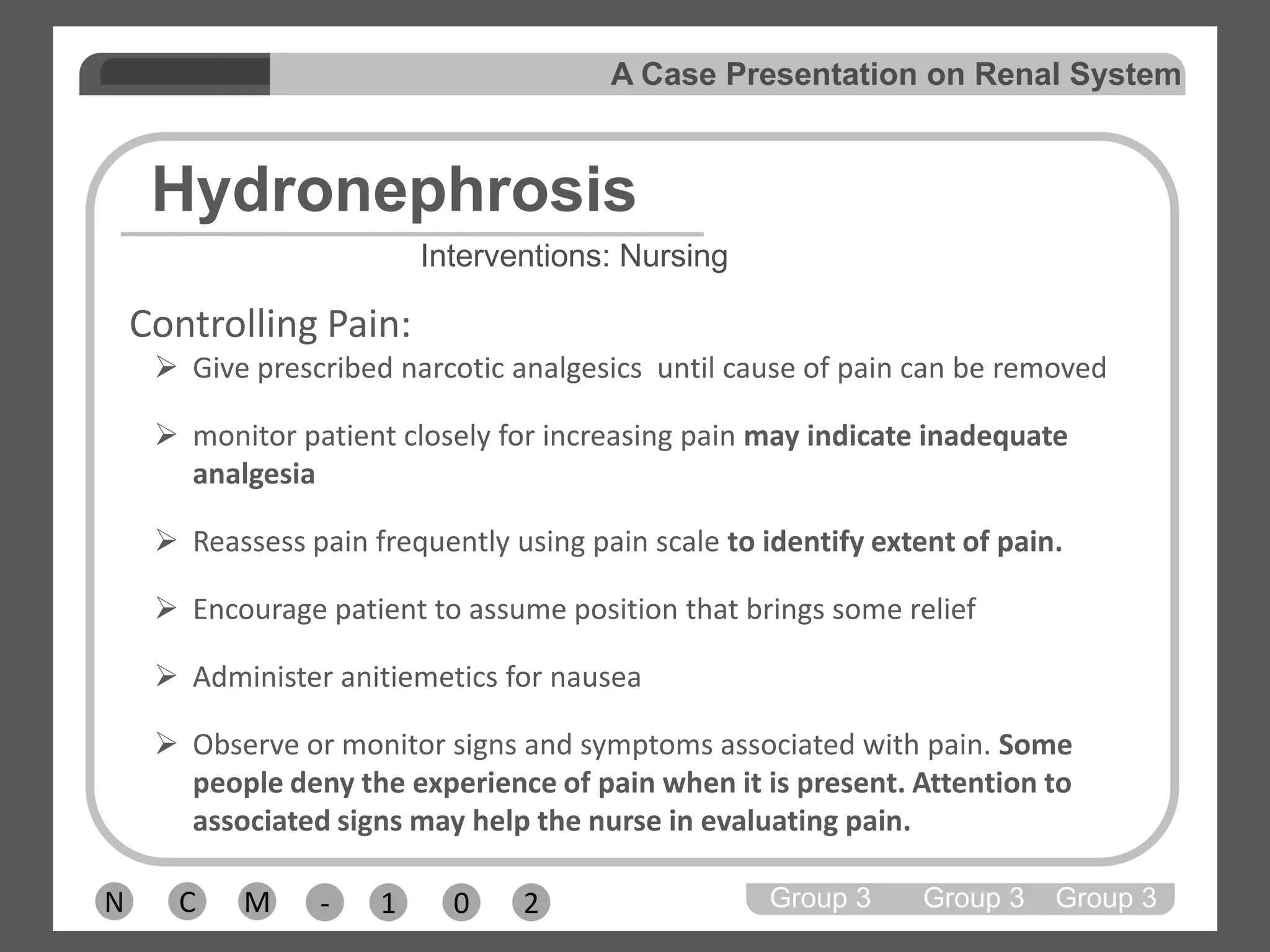
HydronephrosisSubmitted by:Group 3BSN III-WatsonSubmitted to:Miss ShenellDelfin, RNNCM 102 Lecturer
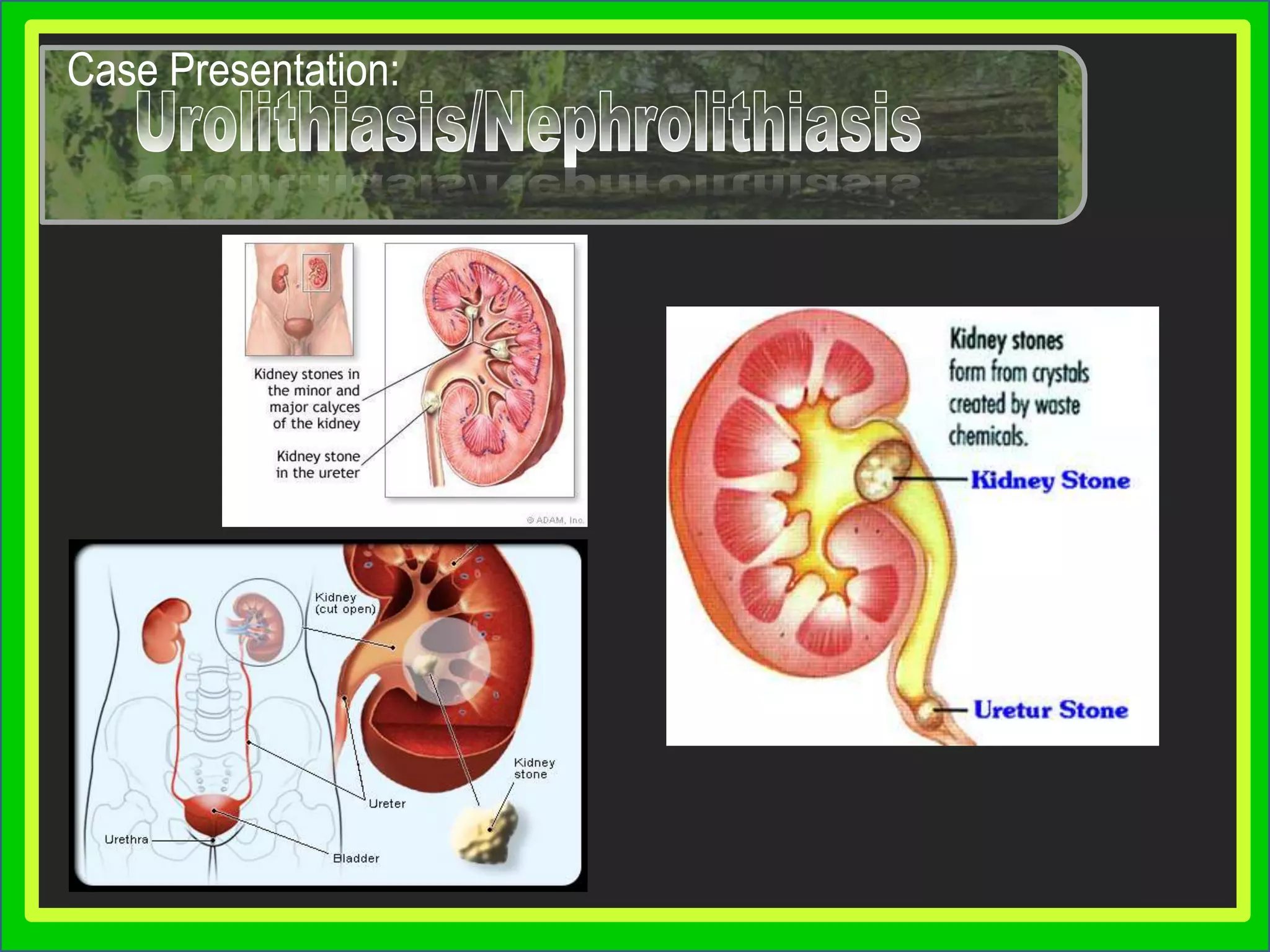
Feed Your Mind…Presentation SkillsCase Presentation:NephrolithiasisUrolithiasisIntroduction of the Diseaseis the condition where urinary calculi are formed in the kidney
13% in men and 7% in women, increasing in industrialized worldFeed Your Mind…Presentation SkillsCase Presentation:UrolithiasisUrolithiasisIntroduction of the Diseaseis the condition where urinary calculi are formed in any part of the urinary tract.
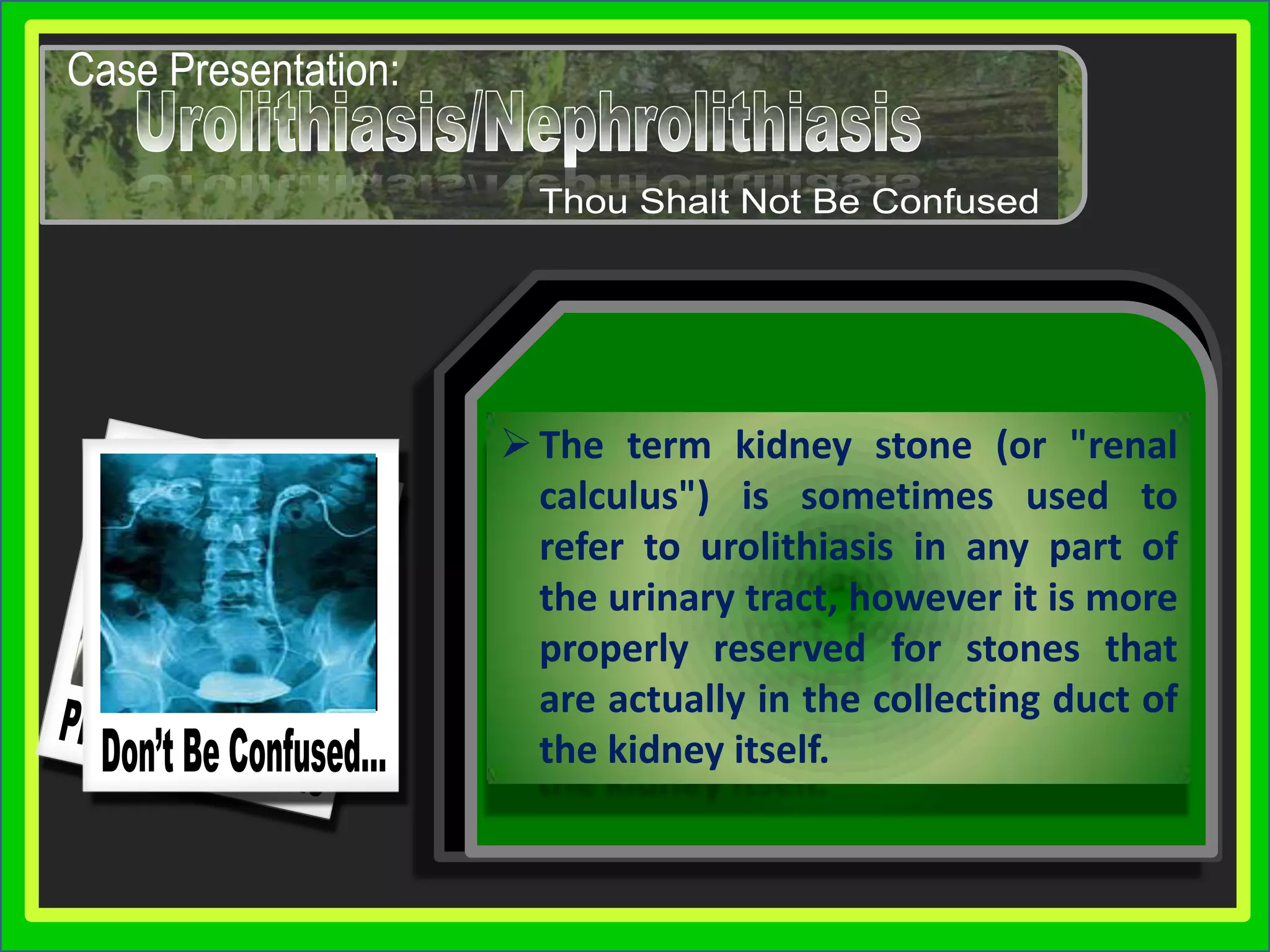
Obstruction of the ureter by the kidney stones causes a renal colic attack which is why intense pain is felt in groin and back.Don’t Be Confused…Presentation SkillsCase Presentation:Urolithiasis/NephrolithiasisUrolithiasis/NephrolithiasisThou Shalt Not Be ConfusedThe term kidney stone (or "renal calculus") is sometimes used to refer to urolithiasis in any part of the urinary tract, however it is more properly reserved for stones that are actually in the collecting duct of the kidney itself.Case Presentation:Urolithiasis/NephrolithiasisUrolithiasis/Nephrolithiasis
Case Presentation:Nephro/UrolithiasisNephro/UrolithiasisDetermining EtiologyKey points:Key points:Stone Formation
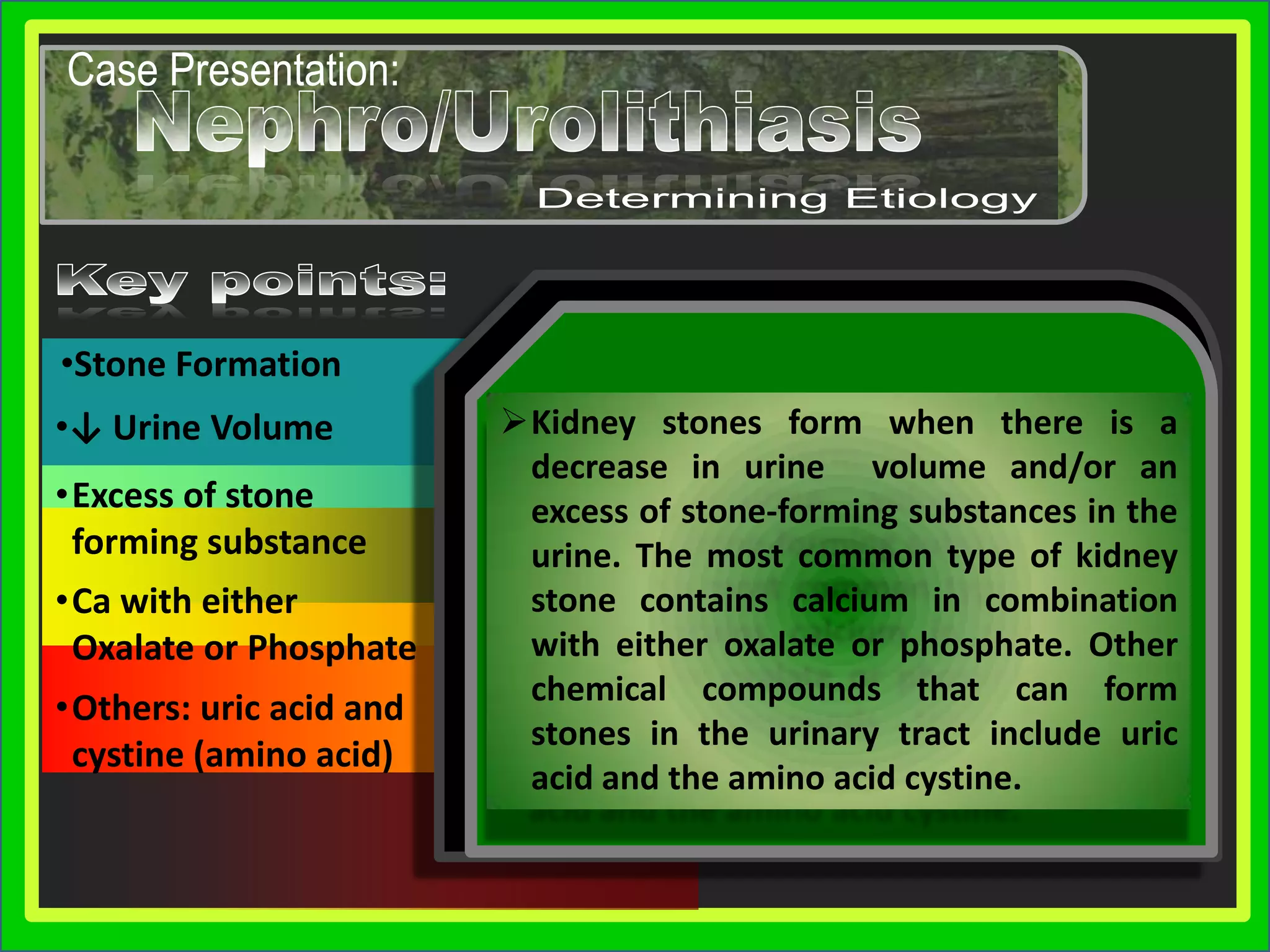
Kidney stones form when there is a decrease in urine  volume and/or an excess of stone-forming substances in the urine. The most common type of kidney stone contains calcium in combination with either oxalate or phosphate. Other chemical compounds that can form stones in the urinary tract include uric acid and the amino acid cystine.
↓ Urine Volume
Excess of stone forming substance
Ca with either Oxalate or Phosphate
Others: uric acid and cystine (amino acid)Case Presentation:Nephro/UrolithiasisNephro/UrolithiasisDetermining EtiologyKey points:Key points:Dehydration or Inadequate fluid intake
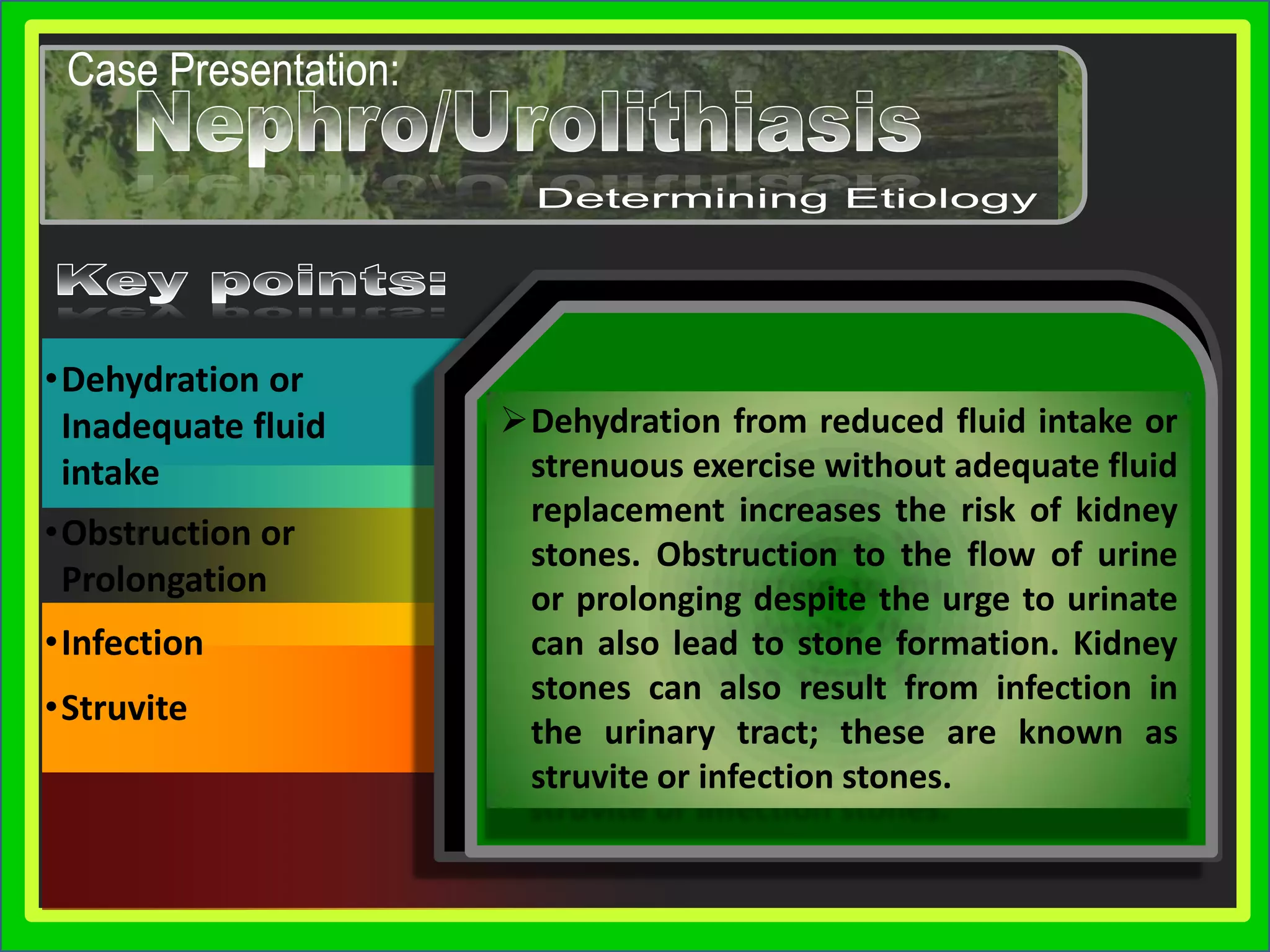
Dehydration from reduced fluid intake or strenuous exercise without adequate fluid replacement increases the risk of kidney stones. Obstruction to the flow of urine or prolonging despite the urge to urinate can also lead to stone formation. Kidney stones can also result from infection in the urinary tract; these are known as struvite or infection stones.
Obstruction or Prolongation
Infection
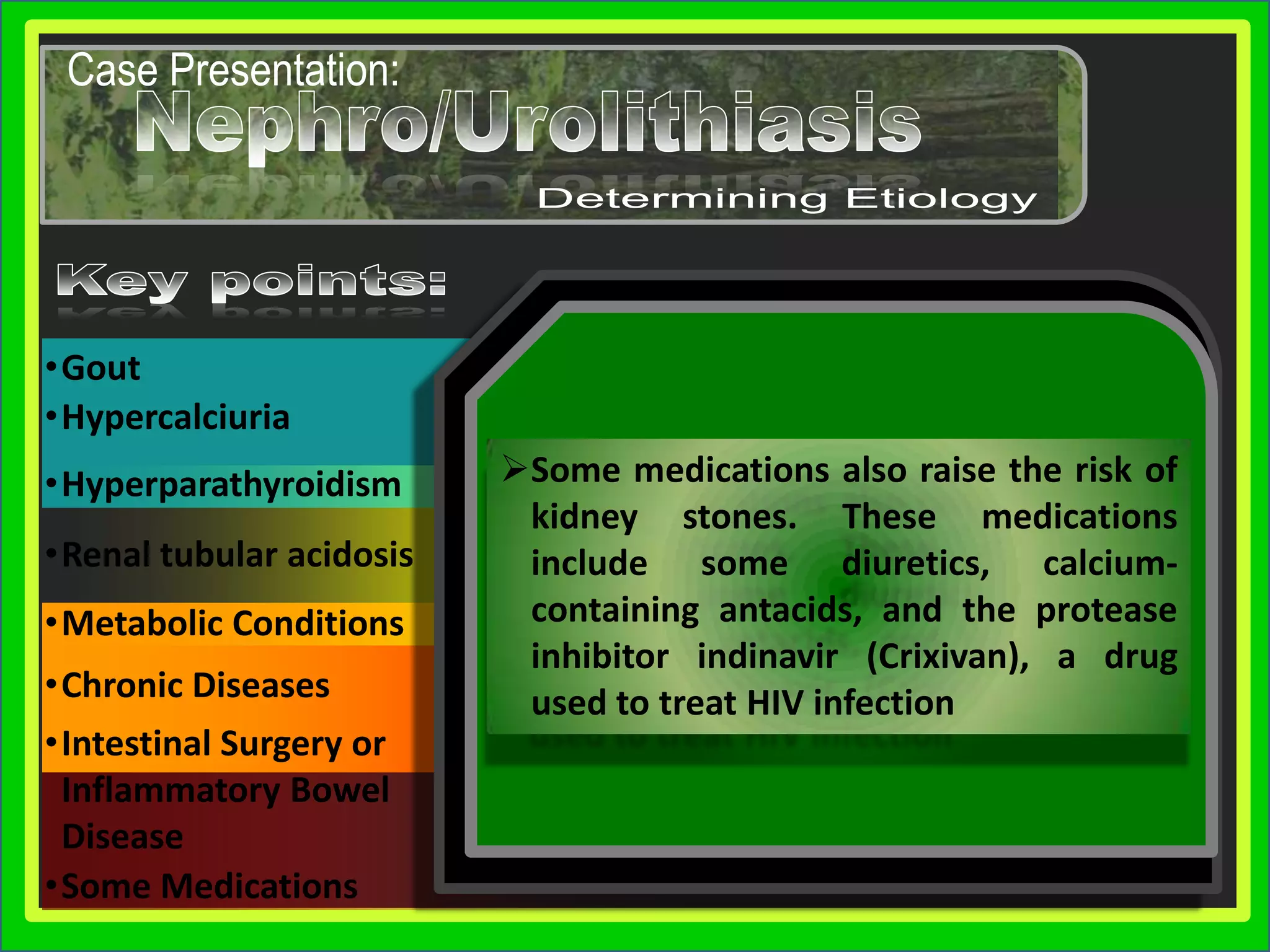
StruviteCase Presentation:Nephro/UrolithiasisNephro/UrolithiasisDetermining EtiologyKey points:Key points:A number of different medical conditions can lead to an increased risk for developing kidney stones:» Loading…» »  Loading…» » »  Loading…» » » »  Loading…» » » » » Loading…
Case Presentation:Nephro/UrolithiasisNephro/UrolithiasisDetermining EtiologyKey points:Key points:Gout
Hypercalciuria
Hyperparathyroidism
Gout – results in an increased amount of uric acid in the urine and can lead to the formation of uric acid stones.
Renal tubular acidosis
Metabolic Conditions
Chronic Diseases
Intestinal Surgery or Inflammatory Bowel Disease
Some MedicationsCase Presentation:Nephro/UrolithiasisNephro/UrolithiasisDetermining EtiologyKey points:Key points:Gout
Hypercalciuria
Hypercalciuria (high calcium in the urine), another inherited condition, causes stones in more than half of cases. In this condition, too much calcium is absorbed from food and excreted into the urine, where it may form calcium phosphate or calcium oxalate stones.
Hyperparathyroidism
Renal tubular acidosis
Metabolic Conditions
Chronic Diseases
Intestinal Surgery or Inflammatory Bowel Disease
Some MedicationsCase Presentation:Nephro/UrolithiasisNephro/UrolithiasisDetermining EtiologyKey points:Key points:Gout
Hypercalciuria
Conditions associated with an increased risk of kidney stones include hyperparathyroidism, kidney diseases such as renal tubular acidosis, and some inherited metabolic conditions including cystinuria and hyperoxaluria. Chronic diseases such as diabetes and HPN are also assoc. with an increased risk of developing kidney stones.
Hyperparathyroidism
Renal tubular acidosis
Metabolic Conditions
Chronic Diseases
Intestinal Surgery or Inflammatory Bowel Disease
Some MedicationsCase Presentation:Nephro/UrolithiasisNephro/UrolithiasisDetermining EtiologyKey points:Key points:Gout
Hypercalciuria
Hyperparathyroidism
People with inflammatory bowel disease or who have had an intestinal bypass or ostomy surgery are also more likely to develop kidney stones.
Renal tubular acidosis
Metabolic Conditions
Chronic Diseases
Intestinal Surgery or Inflammatory Bowel Disease

Urinary disorders watson